
Tooling
Tooling designed and machined for your package
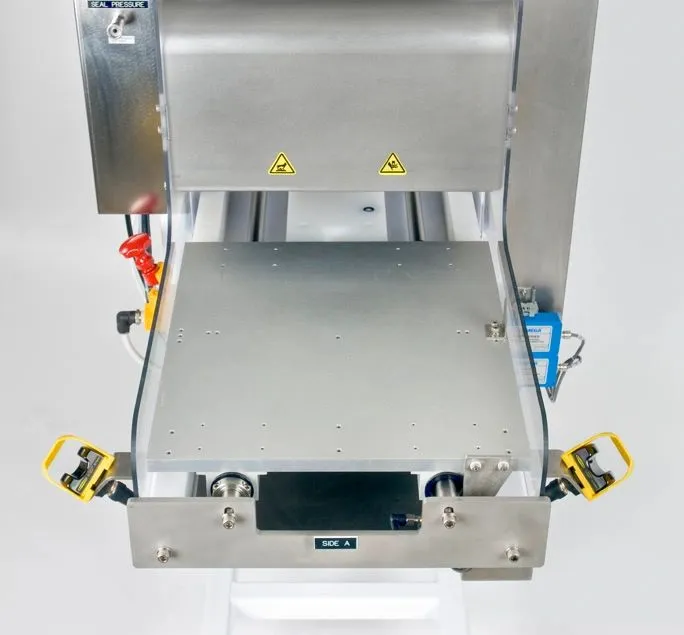
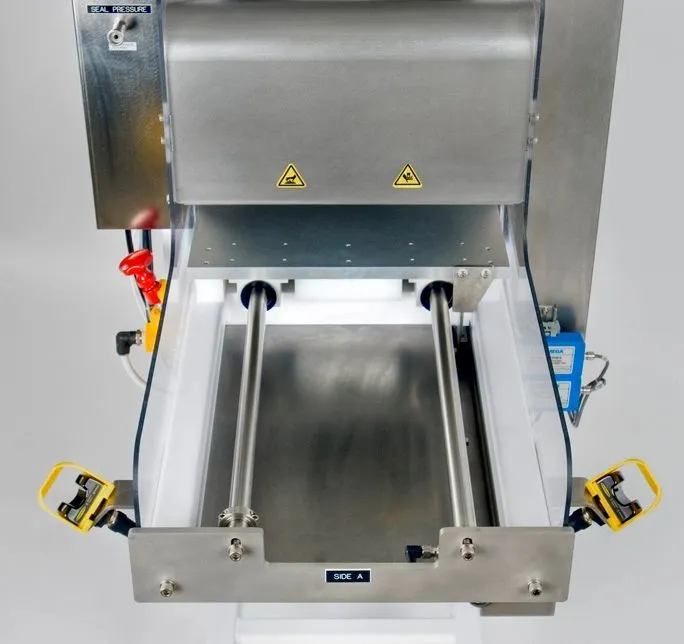
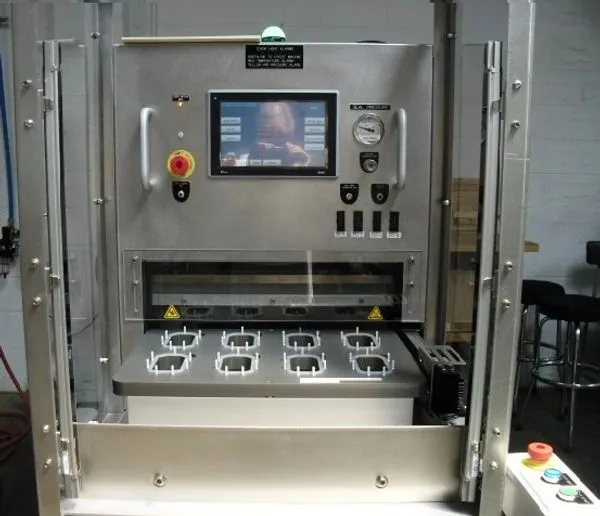
Atlas Vac designs, CNC-machines and tests tooling nests and sealing platens for medical device trays, blister cards and syringe trays, for Atlas Vac sealers and for most other brands.
Design process
From your tray to a machined nest
Atlas Vac tool designers work to the tolerances and clearances required to align thermoformed medical device and orthopedic trays with Tyvek or other lid materials. Each nest sits on the sealer’s precision-machined surface plate, so neither product nor tooling moves up or down during the seal.
-
Your tray drawing or sample
Atlas Vac starts from the tray drawing, a sample tray, or both.
-
3D CAD model
Atlas Vac tool designers model the nest around the tray and its lid stock alignment.
-
CNC machining
The nest is machined in aluminum to precise tolerances of flatness and parallelism.
-
Tested on the sealer
Atlas Vac designs, manufactures and tests each tool. Tooling is quoted separately from the sealer.
-
Single-piece CNC plates
Machined from a single aluminum plate for rigid tray support.
-
Lightweight deep-tray tools
A lightweight tool design for deep trays.
-
Island supports
Supports inside the cavity for complex trays that need support in the middle.
Tooling quality depends on
- Rigidity
- Component fit
- Coatings
- Dimensional accuracy
Seal interface
Gaskets, pins and platens
The details where tooling meets the lid stock and platen determine alignment, wear and changeover time.
-
Seal gaskets
Molded FDA silicone press-in “T” gaskets lock into a groove in the tooling plate without adhesives or fasteners, so a worn or damaged gasket is replaced without scraping off adhesive.
Traditional die-cut sheet gaskets are also available.
-
Plastic spring pins
Low-wear plastic spring pins, Atlas Vac part 81-02-99-2, have been standard on Atlas Vac tooling nests since 2001. They align Tyvek lid stock while reducing wear on the sealing platen. A wide variety of spring pins is available.
Metal spring pins can leave divots in the platen coating or base material. A later tray whose flange lands on a damaged spot is then affected.
- Availability to owners of other sealer brands
- To be confirmed
-
Sealing platens
A flat, coated platen is standard. A relieved platen is used where product inside the tray presses against the lid, to prevent unintended adhesion.
Otherwise the platen contacts only the supported flange gasket landing zone, so relieving other areas does not change seal quality or down-force. A flat platen provides the most even heating surface.
- Confirm surface temperature after any platen change
- Thermal imaging can confirm temperature evenness

Other sealer brands
Tooling for other sealer brands
Atlas Vac modifies tooling and designs retrofit tooling systems for sealers from other manufacturers, including Alloyd and Belco, with short lead times for most brands and models. Atlas Vac tools for Alloyd sealers include patented Atlas Vac features.
To design the tool, Atlas Vac typically needs
- The existing tool, or its drawing
- A package drawing
- Sample trays and lid materials
Tooling and sealer options
Tooling that works with sealer options
Two sealer options depend on matching features built into the tooling.
Controls and options
Project enquiries
Start a tooling project
Send the tray details and sealer information. Atlas Vac tool designers review the package and quote the tooling.
Useful if you have it
Tray drawing or sample tray · Sealer make and model · Existing tool or its drawing
- Address
- Atlas Vac Machine, LLC
9150 Reading Rd
Cincinnati, OH 45215, USA - Phone and email
- (513) 407-3513
sales@atlasvac.com - Hours
- Mon–Fri 08:00 am – 05:30 pm
Saturday by appointment
Sunday closed